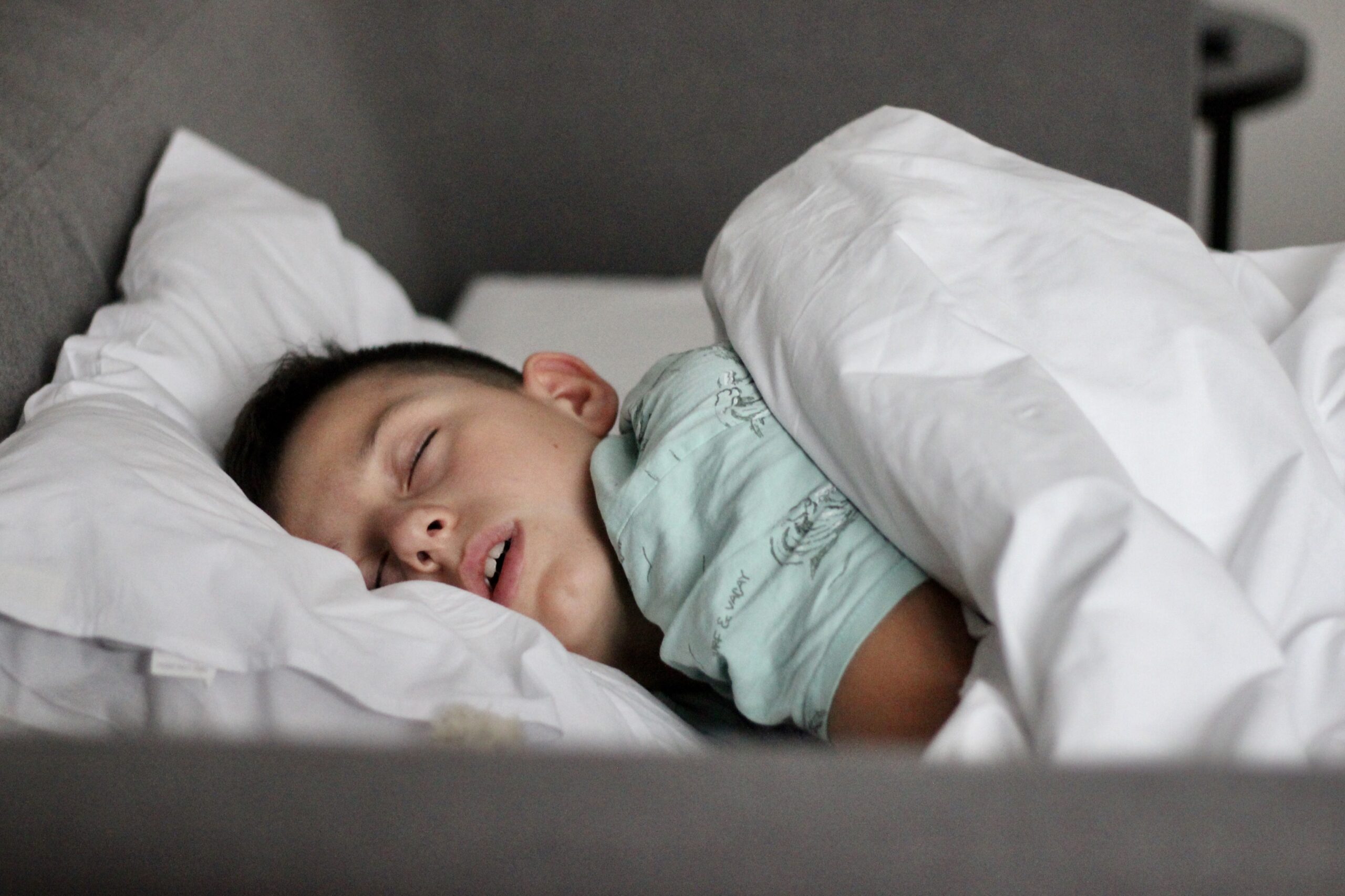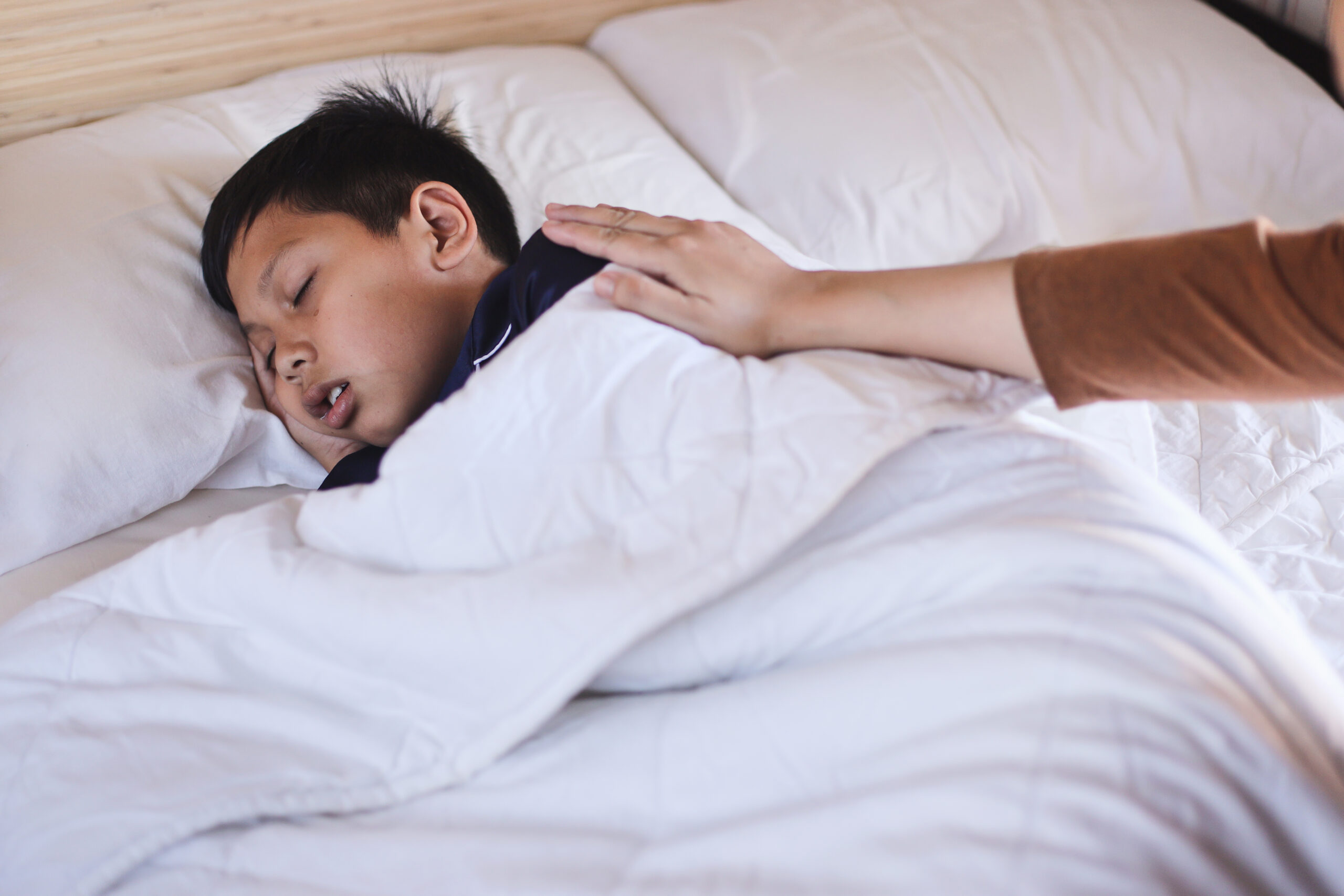
Hearing your child snore for the first time can be startling, but it’s also extremely common — an estimated 1 in 10 children snores at night. The real question isn’t really “why does my child snore,” since there are several possible explanations. It’s whether the snoring you’re hearing is an occasional, harmless occurrence or a sign of something that deserves a closer look.
This article is for general education and isn’t a substitute for a professional medical evaluation.
Occasional vs. Regular Childhood Snoring
According to Cleveland Clinic, consistent snoring in a child doesn’t automatically indicate a serious health problem, and it’s worth putting your mind at ease on that point before anything else. Many children snore occasionally during a cold, seasonal allergies, or a minor upper respiratory infection, when swelling and mucus buildup temporarily narrow the airway. This kind of snoring typically resolves once the underlying congestion clears.
Regular childhood snoring — happening most nights, whether or not your child is sick — is a different picture, and it’s the pattern worth paying closer attention to. A few specific signs are worth watching for: snoring most nights of the week, snoring that’s notably loud, a child who routinely sleeps with their mouth open and chin or neck extended, or moments where you hear your child pause or gasp during sleep.
The Role of Enlarged Tonsils and Adenoids
The single most common cause of childhood snoring and sleep-disordered breathing is enlarged tonsils and adenoids — tissue at the back of the throat and behind the nose that can become large enough to partially obstruct the airway, whether from a recent infection, chronic inflammation, or simply a genetic tendency toward larger tissue. When this tissue takes up significant space, it can restrict airflow enough to cause snoring, and in more significant cases, it’s considered the primary cause of obstructive sleep apnea in children specifically. Other contributing factors can include allergies and chronic nasal congestion, excess weight, and less commonly, structural facial or jaw differences that narrow the airway.
Restless Sleep and Mouth Breathing
Snoring rarely shows up alone. Regular childhood snoring is frequently accompanied by restless sleep — tossing and turning, unusual sleep positions, or frequent brief awakenings that a parent may not even notice happening. Mouth breathing, both during sleep and sometimes during the day, is another common companion sign, since airway obstruction often pushes a child toward breathing through the mouth as a workaround. If your child regularly sleeps with an open mouth, our related guide on Why Does My Child Sleep With Their Mouth Open? covers that pattern and its connections to sleep and jaw development in more depth.
Sleep-Disordered Breathing Signs: When Snoring Points to Something More
Snoring exists on a spectrum. On one end is simple, or “primary,” snoring — noisy breathing without significant impact on sleep quality or oxygen levels. On the other end is obstructive sleep apnea, where the airway becomes obstructed enough to actually interrupt breathing repeatedly through the night. In between is a broader category often called sleep-disordered breathing, which includes children whose airway narrowing disrupts sleep quality without necessarily meeting the full criteria for a sleep apnea diagnosis.
Signs that suggest snoring may be part of a larger sleep-disordered breathing pattern include:
- Witnessed pauses in breathing, gasping, or choking during sleep
- Labored or difficult-looking breathing while asleep
- Sleeping in unusual positions, such as with the neck hyperextended
- Frequent nighttime waking or restless, disrupted sleep
- Bedwetting beyond the age it’s typically expected to resolve
Daytime Fatigue and Behavior
This is one of the most important and most frequently overlooked pieces of the picture. Clinical research on children with enlarged tonsils and adenoids has documented a range of associated complaints beyond nighttime symptoms, including excessive daytime sleepiness, morning headaches, aggressiveness, and restless sleep. Unlike adults, who tend to respond to poor sleep with visible fatigue, children often respond in the opposite direction — becoming more hyperactive, irritable, or inattentive rather than visibly tired. A child who seems to have behavioral or attention difficulties during the day may actually be dealing with fragmented, poor-quality sleep at night, without anyone connecting the two.
When to Talk to a Provider
It’s worth raising the topic with your child’s pediatrician or an airway-focused provider if you notice snoring most nights, unusually loud snoring, mouth breathing alongside the snoring, witnessed breathing pauses or gasping, or daytime behavior and attention concerns that don’t have another clear explanation. Keeping a brief sleep journal — noting what you observe starting about an hour after your child falls asleep — can help provide useful detail for that conversation.
Getting a Full Evaluation
Because childhood snoring can stem from several different causes — tonsil and adenoid size, allergies, airway or jaw structure, or a combination — a proper evaluation looks at the full picture rather than treating snoring as an isolated nuisance. This is exactly the kind of assessment we provide as part of our Pediatric Care services, looking at airway, breathing pattern, and growth together.
If you’ve also noticed signs of a narrow palate or dental crowding, our guide on Narrow or High-Arched Palate in Children covers how palate development and airway function often intersect.
Getting Answers Instead of Guessing
If your child’s snoring happens regularly, or comes with other signs like mouth breathing, restless sleep, or daytime behavior changes, it’s worth having their airway evaluated rather than waiting to see if it resolves on its own. Contact us to schedule a consultation and get a clear picture of what’s actually happening while your child sleeps.
References
- Cleveland Clinic. Does Your Child Snore? These Could Be the Reasons Why. Cleveland Clinic Health Library. https://health.clevelandclinic.org/does-your-child-snore-signs-of-trouble
- Pediatric Obstructive Sleep Apnea: Diagnostic Challenges and Management Strategies. PMC, National Library of Medicine. https://pmc.ncbi.nlm.nih.gov/articles/PMC11649035/