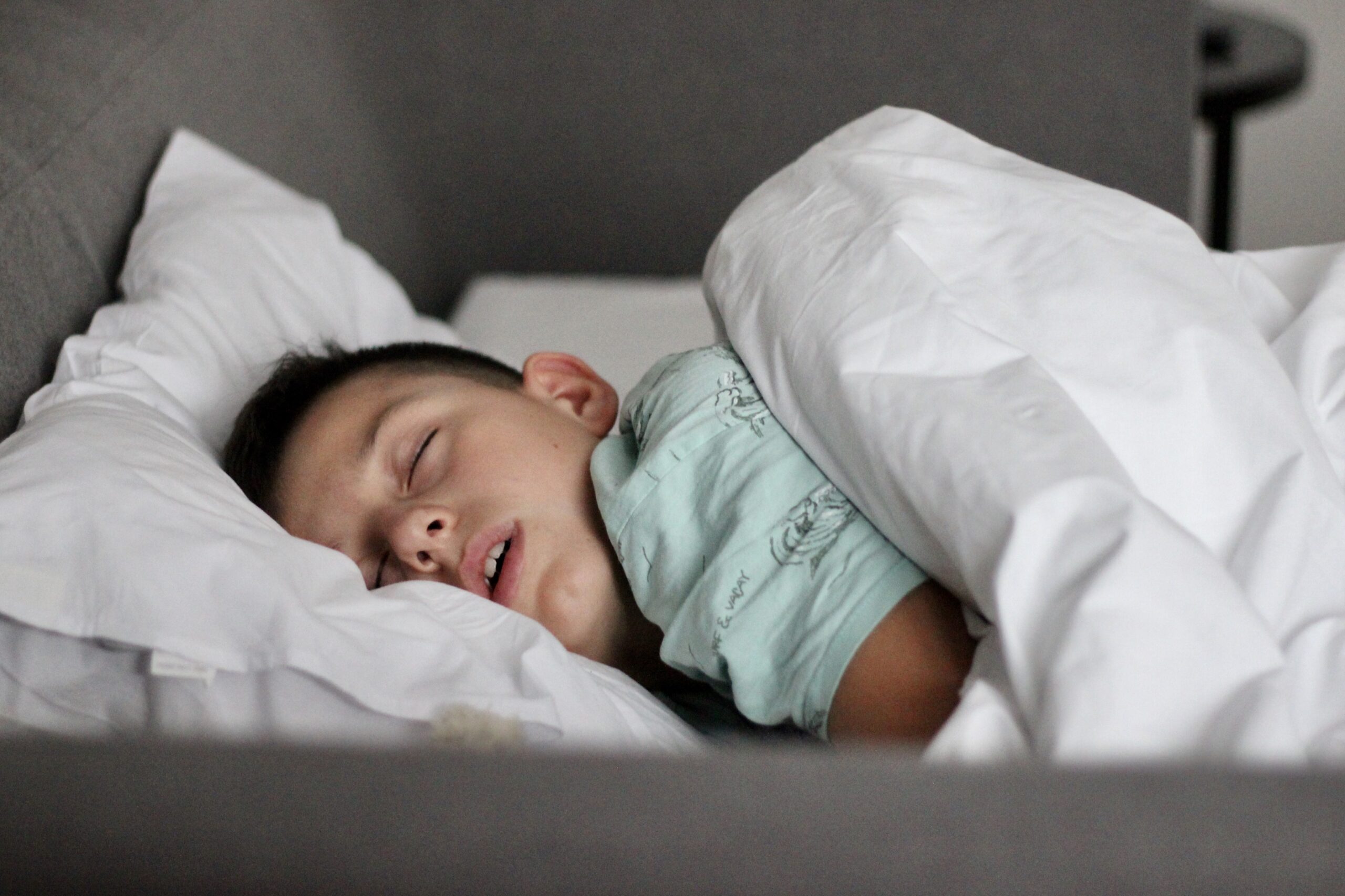
You check on your child at night and notice it again — mouth hanging open, maybe a little snoring, sometimes a dry-sounding breath. It’s easy to assume it’s just how some kids sleep. Sometimes it is. But child mouth breathing, especially when it happens consistently, is worth understanding rather than dismissing, because it can be connected to sleep quality, daytime behavior, and even how your child’s face and jaw develop over time.
This article is for general education and isn’t a substitute for an in-person evaluation.
Mouth Breathing During Sleep — and During the Day
Mouth breathing during sleep often doesn’t happen in isolation. Many children who breathe through their mouth at night also do it during the day, resting with lips parted rather than closed, even while watching TV or doing homework. If you start paying attention, you may notice both patterns are actually part of the same underlying habit.
At night specifically, mouth breathing frequently shows up alongside other signs: snoring, restless tossing and turning, sleeping with the neck tilted back, or waking up with a dry mouth. During the day, watch for an open-mouth resting posture, chapped lips, or a child who seems unusually tired, irritable, or unable to focus despite what looks like a full night of sleep.
Nasal Breathing vs. Mouth Breathing: Why the Difference Matters
The nose isn’t just a passive airway — according to Cleveland Clinic, nasal breathing filters out dust and allergens, warms and humidifies incoming air, and helps the body produce nitric oxide, a molecule that supports oxygen circulation. Mouth breathing skips all of this conditioning, delivering air that’s colder, drier, and less filtered.
Nasal breathing vs. mouth breathing also affects the airway itself during sleep. Breathing through the nose helps maintain more stable airway pressure and resistance, supporting a more open airway overnight. Mouth breathing changes the position of the tongue and soft palate in ways that can make the airway more prone to narrowing — one reason chronic mouth breathing in children is so frequently associated with snoring and disrupted, lower-quality sleep.
Why Mouth Breathing Happens in the First Place
Children don’t choose mouth breathing as a preference — it’s almost always a workaround for something restricting nasal airflow. Common causes include enlarged tonsils or adenoids, chronic nasal congestion or allergies, and structural narrowing of the nasal passages. In some cases, the habit persists even after the original cause has resolved, simply because the pattern became the body’s default over time.
The Link to Sleep and Oral Development
This is where child mouth breathing becomes more than a nighttime annoyance. A systematic review and meta-analysis of pediatric mouth-breathing studies found consistent associations between chronic mouth breathing and facial skeletal changes — including the jaw rotating backward and downward, a steeper bite plane, narrower airway space behind the tongue and soft palate, and a tendency for the upper front teeth to tilt forward.
The mechanism comes down to resting tongue posture. When a child’s mouth stays open to breathe, the tongue rests low in the mouth instead of pressing against the roof of the palate, where it normally provides gentle, ongoing pressure that helps guide the upper jaw’s width during growth. Over months and years, this can contribute to a narrower upper arch, a longer facial profile, and a more recessed lower jaw — changes that happen gradually enough that they’re often not noticed until someone is specifically looking for them.
Sleep quality is affected in parallel. Fragmented, poor-quality sleep from airway narrowing can show up during the day as trouble concentrating, irritability, or hyperactivity — symptoms that are easy to attribute to behavior alone rather than tracing back to how a child is actually breathing at night.
When to Seek an Airway Evaluation
A few patterns are worth bringing to a provider’s attention rather than waiting to see if they resolve on their own:
- Mouth breathing that happens most nights, not just during a cold or allergy flare
- Snoring, restless sleep, or witnessed pauses in breathing
- A consistently open-mouth resting posture during the day
- Dark circles under the eyes, chapped lips, or a dry mouth on waking
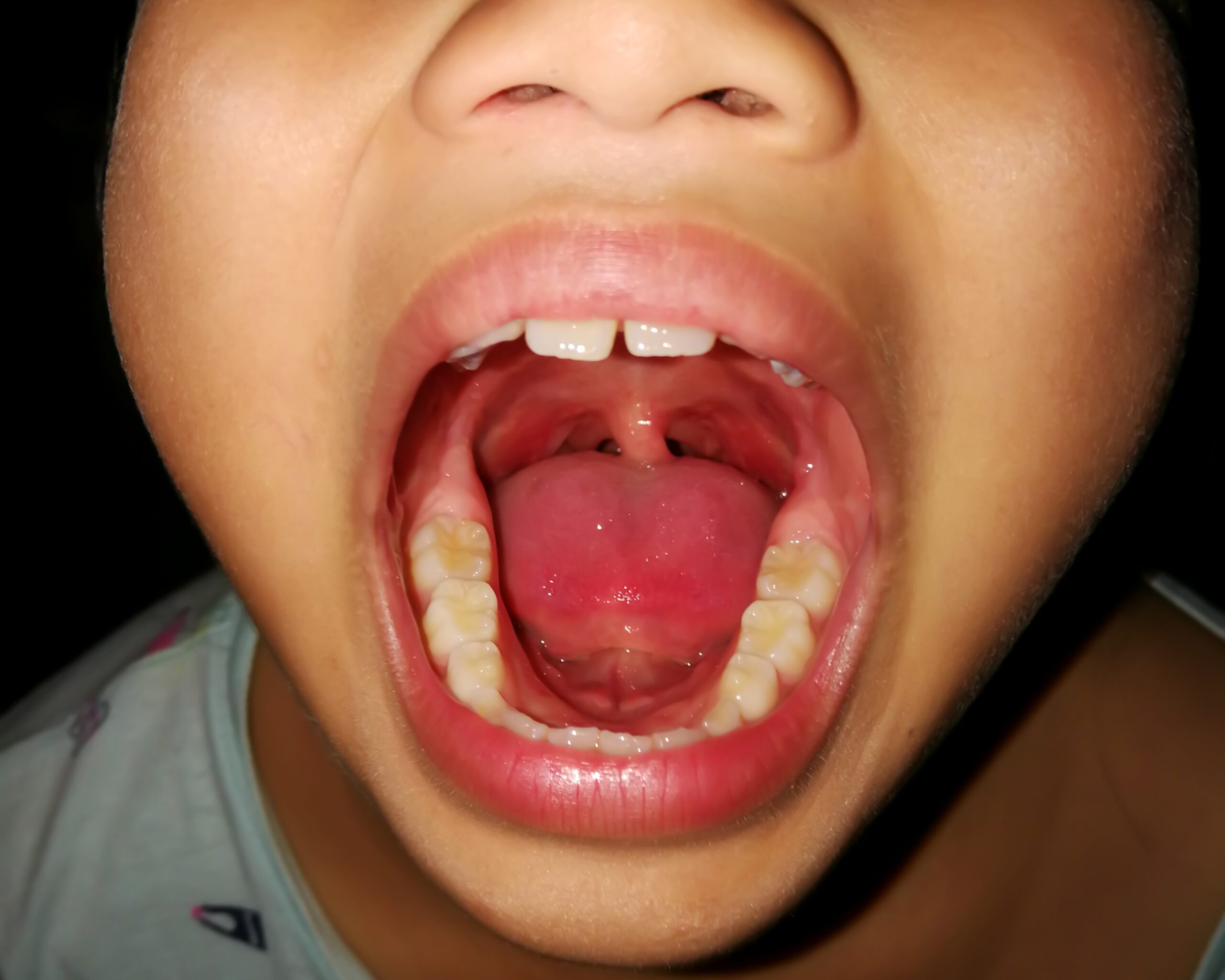
- A narrow-looking upper jaw, crowded teeth, or a high-arched palate as teeth come in
- Daytime fatigue, irritability, or difficulty concentrating that seems disproportionate to how much sleep your child is getting
None of these signs alone confirms a problem, but a cluster of several together is a reasonable reason to pursue a proper evaluation rather than assuming it’s simply a habit your child will outgrow.
What an Evaluation Looks At
A thorough evaluation looks at airway anatomy, jaw and palate structure, tonsil and adenoid size, and sleep patterns together, rather than treating mouth breathing as an isolated behavioral quirk. Depending on findings, next steps might include coordination with an ENT, monitoring growth over time, or airway-focused treatment aimed at supporting healthier jaw development while your child is still growing. Learn more about how we approach this kind of evaluation for children specifically on our Pediatric Care page, and our Airway Care page covers our broader approach to airway-focused treatment.
Getting Answers Instead of Waiting It Out
If your child regularly sleeps with their mouth open, especially alongside snoring, restless sleep, or daytime behavior concerns, it’s worth having their airway evaluated rather than assuming it’s just a phase. Visit our Pediatric Care page to learn more about how we evaluate children specifically, or contact us to schedule a consultation and get a clearer picture of what’s actually happening while your child sleeps.
References
- Cleveland Clinic. Should You Breathe Through Your Nose or Mouth? Cleveland Clinic Health Library. https://health.clevelandclinic.org/breathe-mouth-nose
- Effects of mouth breathing on facial skeletal development in children: a systematic review and meta-analysis. PubMed / BMC Oral Health, PMC, National Library of Medicine. https://www.ncbi.nlm.nih.gov/pmc/articles/PMC7944632/