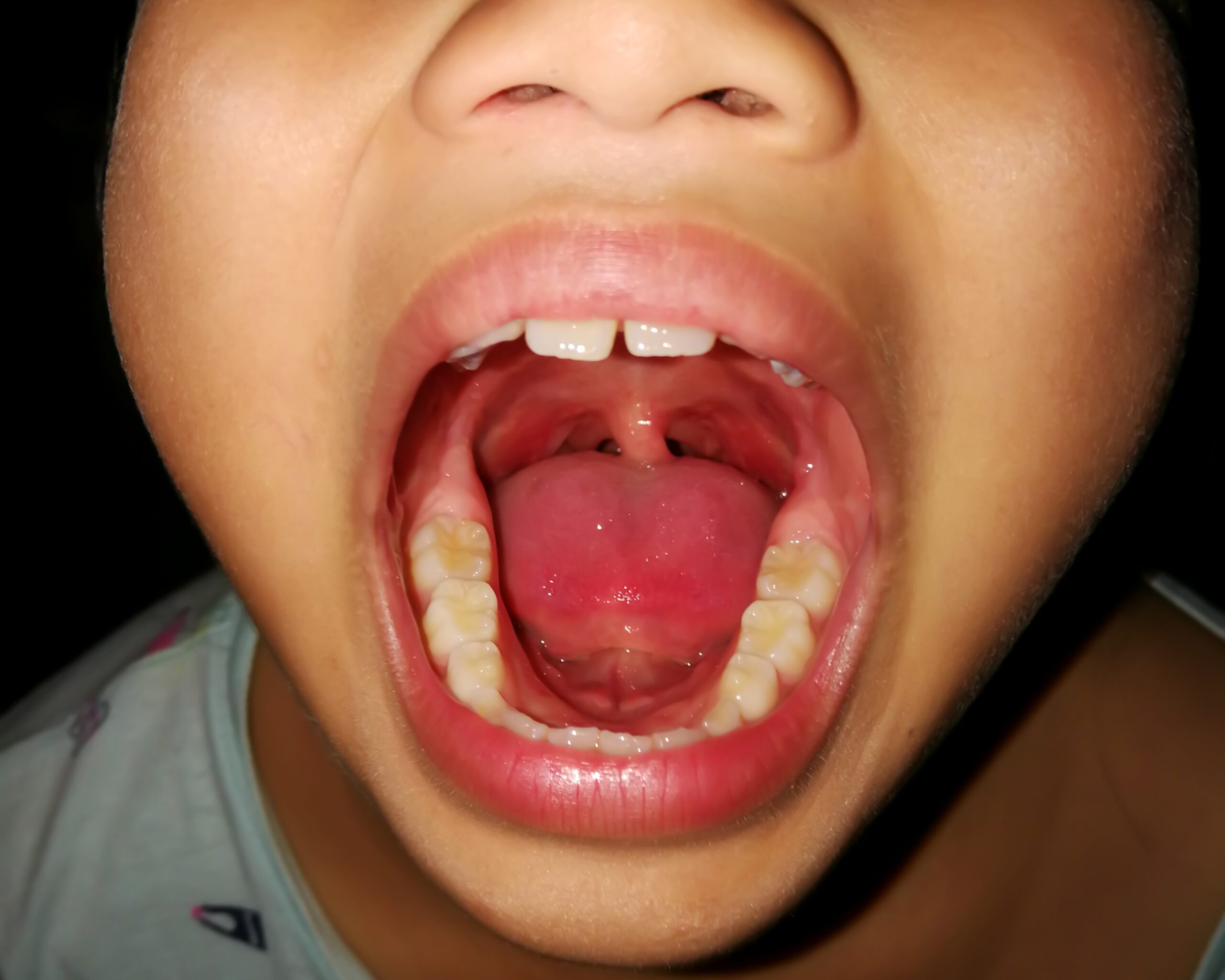
If your child’s dentist or pediatrician has mentioned a narrow or high-arched palate, it can be hard to know how seriously to take it. Is this a cosmetic detail, or something that actually matters for breathing, sleep, and jaw development? The honest answer is that palate shape genuinely does matter — it affects far more than how teeth come in, and it’s worth understanding what to look for and when expansion is worth considering.
This article is for general education and isn’t a substitute for an in-person evaluation.
What Is a Narrow or High-Arched Palate?
The palate is the roof of the mouth, and it forms gradually throughout infancy and childhood. A typical palate is broad and relatively flat, giving the tongue enough room to rest comfortably and the upper teeth enough space to come in properly. A narrow or high-arched palate is one that develops with excess height and insufficient width — sometimes described as a “vaulted” shape — leaving less room both for the tongue below and, importantly, for the nasal airway above, since the roof of the mouth is also the floor of the nasal cavity.
What Causes a Narrow or High-Arched Palate?
Palate shape develops based largely on how the tongue interacts with it during infancy and early childhood. Research examining risk factors for high-arched palate has identified prolonged non-nutritive sucking habits — pacifier or thumb sucking continued well beyond infancy — as a leading contributor, since these habits keep the tongue in a low resting position rather than pressing against the roof of the mouth. Because tongue pressure against the palate is what normally guides its width during growth, a tongue that stays low and flat instead of resting against the palate can allow the palate to grow narrow and tall rather than broad and flat. Other contributing factors include chronic mouth breathing, tongue-tie restricting normal tongue posture, and certain genetic or structural factors.
Dental Crowding and Crossbites
A narrow palate leaves less horizontal room for teeth to come in properly, which frequently shows up as dental crowding — teeth that erupt overlapping, twisted, or unable to fully emerge. It’s also closely linked to posterior crossbite, where the upper back teeth sit inside the lower teeth instead of outside them. Research distinguishes these as related but separate findings: a high-arched palate reflects the palate growing tall at the expense of width, while a crossbite reflects a mismatch in how the upper and lower arches meet — though the two frequently occur together.
Tongue Space and Breathing Considerations
Because the palate and tongue develop in close relationship, a narrow palate often leaves the tongue less room to rest against the roof of the mouth, pushing it into a lower position that can reinforce the same narrow growth pattern over time.
The airway connection is just as significant. Since the palate forms the nasal cavity’s floor, a high, narrow palate can physically reduce space available for nasal airflow, sometimes contributing to chronic mouth breathing, snoring, or more significant sleep-disordered breathing. Palate shape is a genuine airway consideration, not just a cosmetic dental finding.
Facial and Jaw Development
Palate width and jaw development are closely connected. A chronically narrow palate can be associated with a longer facial profile and altered jaw growth patterns over time, since the same low tongue posture that narrows the palate also removes a natural guiding force on upper jaw development. These changes happen gradually, which is part of why they’re often not identified until a dentist or orthodontist evaluates palate and airway together, rather than teeth alone.
Signs of a Narrow or High-Arched Palate Worth Noticing
A few patterns are worth mentioning to your child’s dentist or pediatrician:
- A visibly tall, narrow-looking roof of the mouth
- Dental crowding or teeth erupting out of alignment
- A crossbite, where upper back teeth sit inside the lower teeth
- Chronic mouth breathing or snoring
- Prolonged thumb-sucking or pacifier use beyond toddlerhood
- Speech sound difficulties, particularly with sounds requiring the tongue to contact the palate
Palatal Expansion Signs: When Might Expansion Be Considered?
Palatal expansion is typically considered when a child shows a genuinely narrow upper arch, posterior crossbite, dental crowding related to insufficient width, or airway-related concerns like chronic mouth breathing or diagnosed sleep-disordered breathing where a narrow palate appears to be a contributing factor. Research on expansion in growing children notes that candidates typically include patients with dental crowding, posterior crossbite, narrow palates or high arches, and certain bite discrepancies — with treatment aimed at widening the maxilla while the mid-palatal suture is still responsive to expansion forces, generally during specific childhood and adolescent growth windows rather than later in life.
Not every narrow-looking palate requires expansion — the decision depends on a full evaluation of dental alignment, airway findings, and growth stage together, not appearance alone.
Why an Evaluation Should Look at the Whole Picture
Because narrow palate development is so closely tied to tongue posture, breathing pattern, and jaw growth, it’s rarely useful to evaluate it in isolation from those other factors. If your child also shows signs of chronic mouth breathing, our related guide on Why Does My Child Sleep With Their Mouth Open? covers that connection directly, and our Pediatric Care page covers how we evaluate palate, airway, and jaw development together in growing children.
Getting a Clear Evaluation
If you’ve noticed signs of a narrow or high-arched palate in your child — whether it’s crowding, a crossbite, mouth breathing, or a visibly tall palate — a comprehensive evaluation is the best way to understand what’s actually going on and whether expansion or other treatment makes sense. Contact us to schedule a consultation and get a clear picture of your child’s palate, airway, and growth together.
References
- Risk Factors for High-Arched Palate and Posterior Crossbite at the Age of 5 in Children Born Very Preterm: EPIPAGE-2 Cohort Study. PMC, National Library of Medicine. https://pmc.ncbi.nlm.nih.gov/articles/PMC9051072/
- Non-dental Effects of Rapid Maxillary Expansion in Growing Children: A Literature Review. PMC, National Library of Medicine. https://www.ncbi.nlm.nih.gov/pmc/articles/PMC12796548/