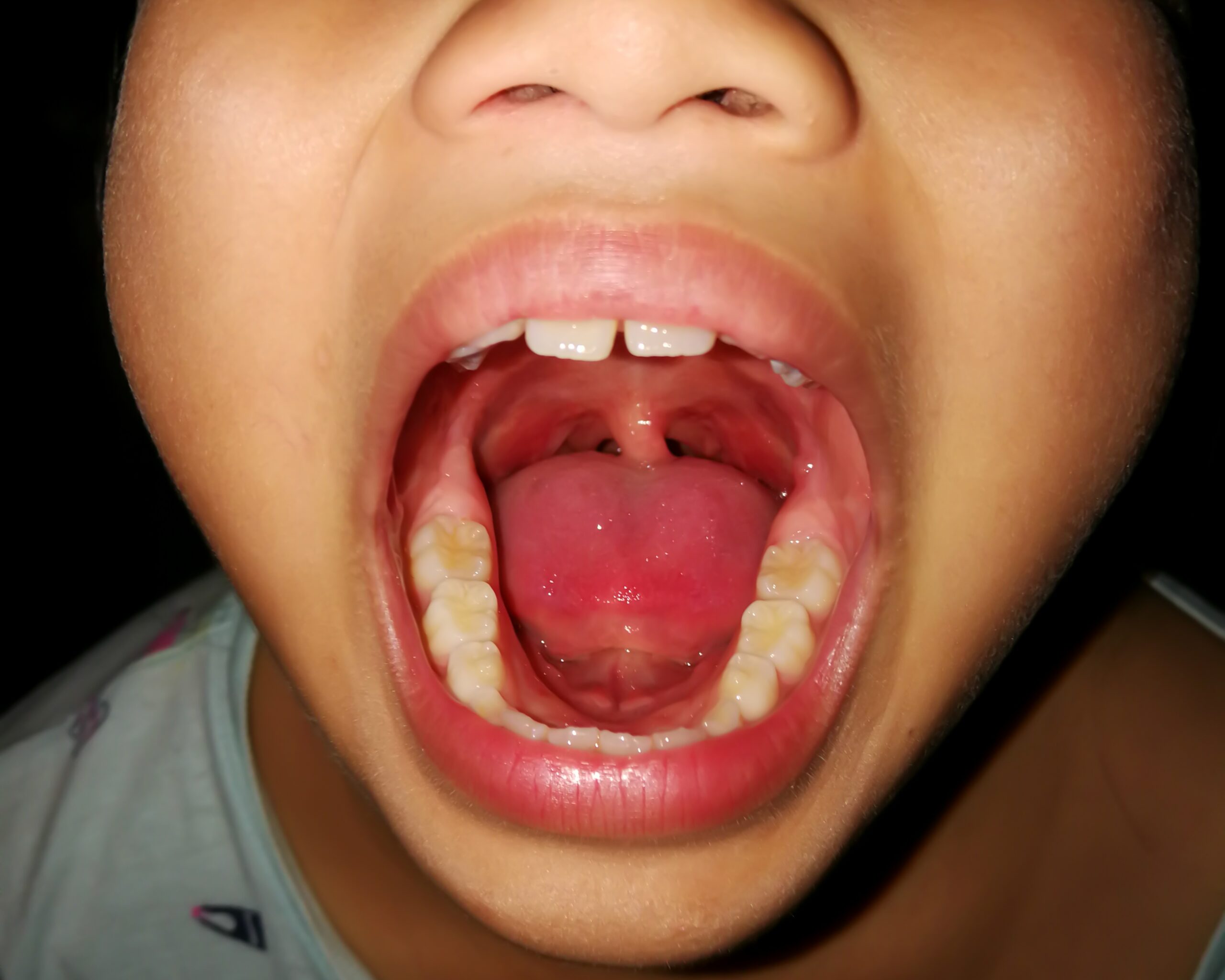
Palatal expansion is one of the most well-established tools in growth-focused pediatric dentistry — not because it’s a quick fix, but because it works with a child’s natural development to correct problems that only get harder to address once growth slows down. If your child has been diagnosed with a narrow palate, a crossbite, dental crowding, or airway-related breathing concerns, palatal expansion may be part of the conversation, and understanding what it actually involves can make that conversation a lot less confusing.
This page is for general education and isn’t a substitute for an in-person evaluation.
What Is Palatal Expansion?
A palate expander is an appliance, custom-fitted to your child’s mouth, that applies gentle, controlled pressure to widen the upper jaw over time. In children whose midpalatal suture — the natural growth line running down the center of the palate — hasn’t yet fused, this pressure gradually separates and widens the underlying bone itself, not just the position of the teeth. This is what makes palatal expansion a growth guidance appliance rather than a purely cosmetic dental tool: it’s actively directing how the upper jaw develops while that development is still possible.
When Is Palatal Expansion Considered?
Expansion isn’t a default recommendation for every child — it’s considered when a genuine narrow-arch pattern or related issue is identified during evaluation. The most common reasons include:
Dental crowding. When there isn’t enough room in the upper arch for teeth to come in properly, expansion creates additional space, sometimes reducing or eliminating the need for later extractions.
Crossbites. A posterior crossbite — where the upper back teeth sit inside the lower teeth instead of outside them — is one of the clearest and most common reasons a palate expander is recommended, since it reflects an actual width discrepancy between the upper and lower arches.
A narrow or high-arched palate. When the palate has developed tall and narrow rather than broad and flat, expansion addresses the underlying structural cause rather than just the teeth affected by it.
Airway-related concerns. Chronic mouth breathing, snoring, or diagnosed sleep-disordered breathing where a narrow palate appears to be contributing to airway restriction is an increasingly recognized reason to consider expansion, alongside its traditional orthodontic role.
Creating Room for the Tongue
A narrow palate often leaves the tongue with less space to rest properly against the roof of the mouth, which can reinforce low tongue posture and, over time, contribute to the same narrow growth pattern that caused the problem in the first place. Widening the palate creates more room for the tongue to rest where it should, which can help interrupt that cycle rather than leaving it to continue on its own.
Airway Considerations
Because the palate forms the floor of the nasal cavity, widening it doesn’t just create room for teeth and tongue — it can meaningfully affect nasal airflow as well. Stanford Medicine Children’s Health specifically identifies rapid maxillary expansion as a treatment option for pediatric obstructive sleep apnea, noting that the device widens both the palate and the nasal passages. A broader literature review of expansion’s non-dental effects similarly found that patients with dental crowding, posterior crossbite, and narrow palates or high arches are typical candidates, with treatment aimed at correcting transverse maxillary constriction more broadly than teeth alone.
This is exactly why we evaluate palate width as part of a broader airway assessment rather than a purely orthodontic decision. If your child has shown signs of a narrow palate specifically, our related page on Narrow or High-Arched Palate in Children covers those signs in more detail, and our guide on Why Does My Child Snore? covers the airway symptoms that sometimes accompany a narrow palate.
Why Timing Matters
A child’s midpalatal suture is most responsive to expansion forces before it begins to fuse with age, which is why palatal expansion is typically considered during specific childhood and adolescent growth windows rather than adulthood, when the suture has matured and often requires a more involved, surgically-assisted approach to achieve similar results. Starting expansion at the right point in a child’s growth generally means working with natural development rather than against it — often with a gentler, more efficient process than waiting would allow.
Treatment Approaches
Not every case calls for the same type of expander. Depending on your child’s specific anatomy, age, and the severity of the narrow-arch pattern, treatment might involve a traditional tooth-anchored expander, a slower, more gradual expansion approach, or in select cases, a bone-anchored design for patients whose anatomy calls for more direct skeletal expansion. The right approach depends on a full evaluation of palate width, dental development, and airway findings together — not a one-size-fits-all appliance chosen without that context.
If mouth breathing or tongue posture is part of your child’s picture as well, our page on Why Does My Child Sleep With Their Mouth Open? explains how breathing pattern and palate development often develop together, and why addressing both matters more than treating either in isolation.
What an Evaluation Looks Like
Determining whether palatal expansion is right for your child starts with a comprehensive evaluation of dental alignment, palate width, tongue posture, and airway function — assessed together rather than in isolation. This is the same growth-focused approach behind our Pediatric Care services, where we look at how your child’s growth, breathing, and dental development are connected.
Getting Started
If your child has been diagnosed with a narrow palate, crossbite, crowding, or airway-related breathing concerns, the right next step is a thorough evaluation to determine whether palatal expansion — and which specific approach — makes sense for their growth stage and anatomy. Contact us to schedule a consultation and get a clear, personalized plan for your child.
References
- Non-dental Effects of Rapid Maxillary Expansion in Growing Children: A Literature Review. PMC, National Library of Medicine. https://www.ncbi.nlm.nih.gov/pmc/articles/PMC12796548/
- Stanford Medicine Children’s Health. Obstructive Sleep Apnea in Children. https://www.stanfordchildrens.org/en/topic/default?id=obstructive-sleep-apnea-in-children-90-P02026